

Customizing User Dashboard Modules and Setting Up Multi-Wallet Tracking Views Across a Modern Next-Gen Crypto Asset Portal Layout
1. Modular Dashboard Architecture: Core Principles and Customization
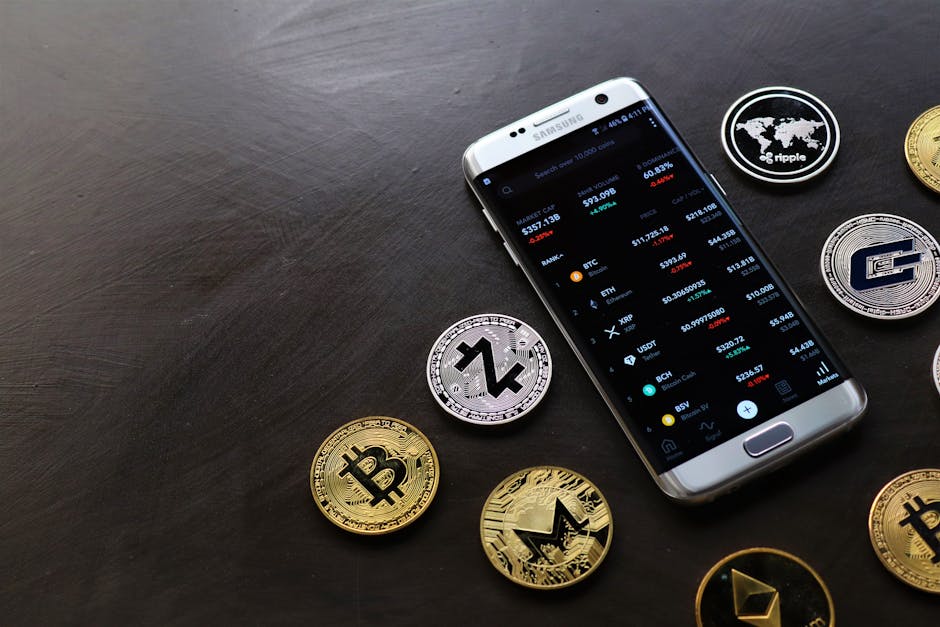
Modern crypto asset portals have moved beyond static interfaces. The core of a next-gen layout is a modular dashboard where each component-portfolio summary, transaction history, DeFi yields, or NFT gallery-is an independent widget. Users can drag, resize, or hide these modules to match their trading or monitoring style. The crypto asset portal we reference implements a grid-based system where each module has configurable data sources and refresh intervals. For example, a trader focused on spot markets can place the order book module next to the price chart, while a DeFi farmer might prioritize yield aggregator and staking reward widgets.
Widget Configuration and Data Binding
Each module exposes a settings panel (gear icon) allowing granular control. Users can bind specific blockchain networks (Ethereum, Solana, BSC) to a widget, filter by asset type (ERC-20, SPL, BEP-20), or set alert thresholds. For instance, the “Portfolio Value” module can be configured to show only assets above $100 in value or to exclude stablecoins. The system saves these preferences per user profile, ensuring the layout persists across sessions. Advanced users can also enable “smart grouping” where the portal automatically clusters tokens from the same protocol.
2. Setting Up Multi-Wallet Tracking Views
Tracking multiple wallets is essential for portfolio managers, analysts, or users with diverse holdings across exchanges and self-custody. The portal supports adding up to 50 wallet addresses per account. To set up a multi-wallet view, navigate to the “Wallets” section in the sidebar. Click “Add Wallet” and paste the address-the system auto-detects the blockchain. You can label each wallet (e.g., “Trading Hot Wallet,” “Long-term Cold Storage”). The aggregated view combines all balances into a single portfolio pie chart, while a “per-wallet” view shows breakdowns side-by-side.
Real-Time Synchronization and Cross-Chain Aggregation
Once wallets are added, the portal uses RPC endpoints and indexers to fetch balances every 30 seconds by default. Users can adjust the sync interval to 5 seconds for high-frequency traders or 5 minutes for passive holders. A crucial feature is cross-chain aggregation: if you hold USDC on Ethereum, Polygon, and Arbitrum, the system displays a unified USDC balance with a breakdown per chain. Filters allow showing only “total value” or “value per chain.” The multi-wallet view also tracks transaction history for each wallet, color-coded by chain.
3. Advanced Layout Customization and Preset Management
Beyond simple dragging, the portal offers “Layout Presets.” Users can save their current arrangement as a named preset (e.g., “Scalping Setup,” “Long-Term Review”). Presets store module positions, sizes, and data filters. Switching between presets is instantaneous. For power users, a “Layout Editor” allows defining custom grid templates-3-column, 2-1 sidebar, or full-width chart. The editor includes a “snap-to-grid” option for pixel-perfect alignment. Additionally, users can set “conditional visibility”: for example, show the “Liquidations” module only during high volatility (market movement >2% in 1 hour).
Security and Session Persistence
All customizations are encrypted and stored server-side. If a user logs in from a new device, their layout syncs automatically. The portal also supports “read-only sharing” of a dashboard view via a unique URL-useful for team collaboration without exposing private keys. Audit logs track any changes to wallet lists or module configurations.
4. Practical Use Cases and Performance Optimization
A typical use case: a day trader sets up three wallet views-one for Binance (exchange API), one for MetaMask (DeFi), and one for Ledger (cold storage). They configure the “Portfolio Performance” module to show 24h P&L across all wallets, while the “Recent Trades” module only pulls data from the Binance wallet. To optimize performance, the portal lazy-loads modules not in the viewport and caches blockchain data for 10 seconds. Users with limited bandwidth can enable “data saver” mode, which reduces chart resolution and disables real-time order book updates.
FAQ:
Can I add hardware wallet addresses directly?
Yes, you can paste any public address from Ledger, Trezor, or other hardware wallets. The portal only reads on-chain data, never requests private keys.
How many modules can I have on one dashboard?
There is no hard limit, but performance is optimal with up to 12 modules per view. For more, consider creating multiple dashboards.
Do multi-wallet views support Solana and Bitcoin?
Yes, the portal supports Bitcoin, Ethereum, Solana, Polygon, Arbitrum, BSC, and 10+ other chains. New chains are added monthly.
Can I export my dashboard layout to share with others?
Yes, you can export the layout as a JSON file and import it on another account. Shared read-only links are also available.
Is there a mobile version of the dashboard?
Yes, the portal auto-adapts to mobile screens. Modules stack vertically, and multi-wallet views are accessible via a collapsible drawer.
Reviews
Alex K., DeFi Analyst
I manage 14 wallets across 6 chains. The multi-wallet view saved me hours of manual checking. The cross-chain aggregation is flawless.
Sarah L., Day Trader
Custom modules let me strip out everything but order book and chart. The layout presets are a lifesaver for switching between scalping and swing trading.
Mike T., Portfolio Manager
We use the shared dashboard feature for our team. Everyone sees the same data, but each member can customize their personal view. Highly recommended.